For many ecommerce brands, retailers, wholesalers, distributors, and 3PL-backed sellers, the biggest profit leak is not always new customer acquisition or supplier cost. It is what happens after inventory stops moving forward.
Returns come back. Seasonal products miss their window. Overstock piles up. Customer-damaged packaging creates resale friction. Discontinued SKUs sit in warehouse corners. Slow-moving pallets take up valuable space. Every week, the inventory looks like an asset on paper while quietly draining cash in the real business.
That is the reverse logistics problem.
According to the National Retail Federation (NRF), product returns continue to represent a significant challenge for retailers, creating billions of dollars in operational costs and inventory management issues each year.
For growing businesses, reverse logistics can become a serious cost center. It ties up warehouse labor, cash, space, reporting, and management attention. If returns and aged inventory are not handled quickly, they can become one of the fastest ways to lose margin.
Liquidation is one of the most practical solutions because it gives businesses a path to recover cash, clear space, and move inventory out of the system before value drops further.
Why Reverse Logistics Is More Than a Returns Problem
Many businesses think of reverse logistics as customer returns. That is only part of the picture.
Reverse logistics can include:
- Ecommerce returns
- Amazon FBA removals
- Retail shelf pulls
- Overstock inventory
- Discontinued products
- Seasonal leftovers
- Open-box products
- Damaged-box goods
- Excess wholesale inventory
- Cancelled purchase orders
- Packaging-change inventory
- Short-dated or date-sensitive goods
- Slow-moving warehouse stock
- Store closure inventory
- Marketplace inventory that no longer sells profitably
The challenge is that every returned or aged product requires a decision.
Should it be restocked? Repacked? Discounted? Sent to another warehouse? Sold through a marketplace? Liquidated? Donated? Disposed of?
Every decision takes time. Every delay has a cost.
The Cash Flow Problem Behind Aged Inventory
Inventory ties up cash from the moment it is purchased.
When that inventory sells quickly, the cash cycle works. You buy goods, sell them, collect revenue, and reinvest. But when inventory ages, the cycle breaks.
Aged inventory creates cash flow pressure because money stays locked in products that are not converting. That means less cash for profitable inventory, supplier payments, advertising, payroll, freight, or growth opportunities.
The longer inventory sits, the more problems it creates:
- Warehouse costs increase.
- Handling costs increase.
- Product value may decline.
- Packaging may become outdated.
- Demand may shift.
- Seasonal relevance may disappear.
- Marketplace fees may continue.
- Internal teams waste time managing old stock.
- Cash remains unavailable for better opportunities.
This is why aged inventory should not be treated as a passive issue. It is an active drain on the business.
Businesses looking to move aging stock can also explore guide on Ohio overstock buyers to understand how bulk inventory liquidation works.
Returns Can Quietly Destroy Margin
Returns are expensive because the original sale is only part of the story.
When a customer returns a product, the business may lose shipping cost, handling cost, payment processing cost, packaging value, labor time, and sometimes the ability to resell the item at full price. If the product comes back damaged, opened, incomplete, or out of season, recovery becomes even harder.
A returned item may need to be:
- Received
- Scanned
- Inspected
- Graded
- Repacked
- Relabeled
- Restocked
- Discounted
- Moved to a secondary channel
- Liquidated
- Recycled or disposed of
That is a lot of operational work for a sale that has already been refunded.
For low-margin categories, returns can quickly turn a profitable order into a loss.
Research from NetSuite highlights that reverse logistics costs continue to rise as ecommerce return volumes increase, making inventory recovery strategies more important than ever.
This is especially true for products like apparel, consumer goods, home goods, accessories, beauty tools, electronics accessories, toys, seasonal merchandise, and general merchandise. Even when the product is still usable, it may no longer qualify as new, giftable, or full-price inventory.
Why Inventory Visibility Matters?
Poor inventory visibility makes reverse logistics worse.
If a business does not know exactly what it has, where it is, what condition it is in, and how long it has been sitting, it cannot make fast decisions.
Returned and aged inventory often gets pushed aside because teams are focused on new orders. That delay creates a hidden backlog.
A warehouse may have pallets of mixed returns, discontinued SKUs, damaged cartons, or slow-moving items that are not clearly reported in the main inventory system. On paper, the inventory exists. In reality, it may not be sellable through the original channel.
This gap between reported inventory and recoverable inventory is where cash gets lost.
A liquidation process helps force clarity. It requires the business to identify, count, describe, and move the inventory instead of letting it sit in an undefined state.
The Warehouse Space Problem
Warehouse space is not free.
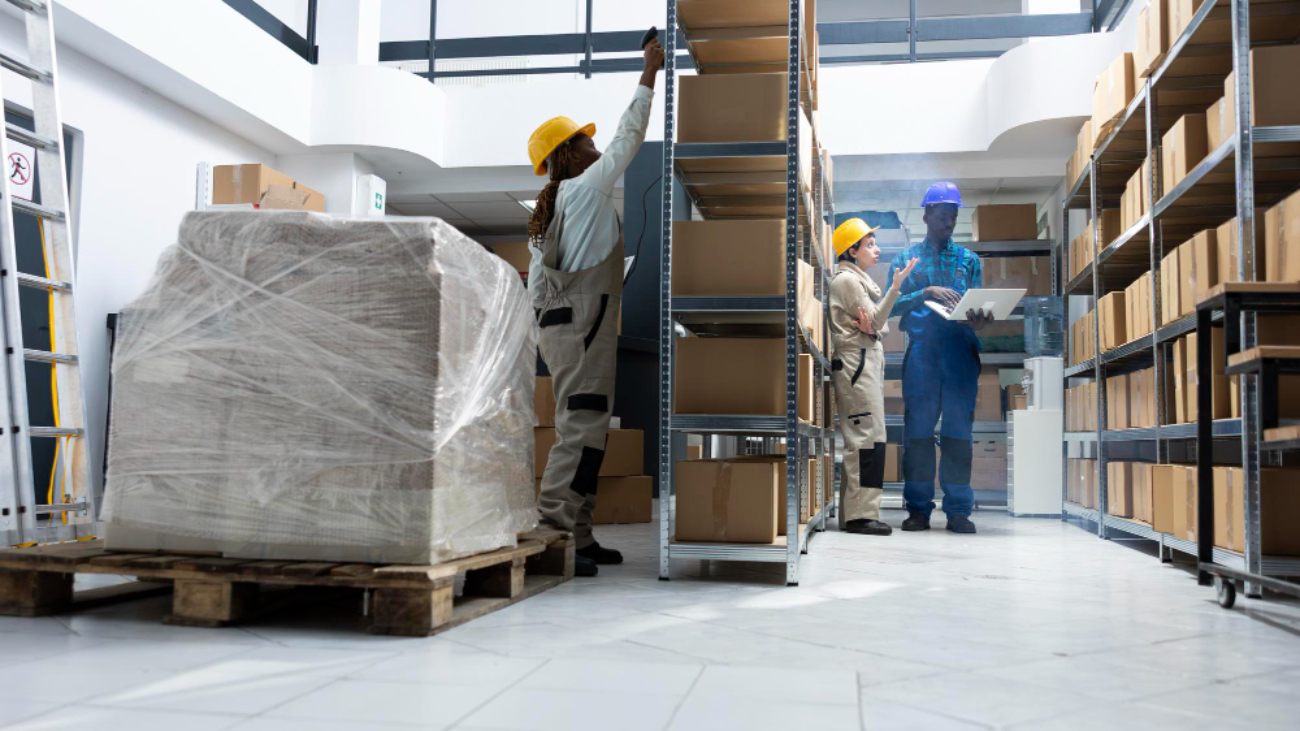
Every pallet of aged inventory takes up space that could be used for faster-moving products. Every bin filled with returns slows down operations. Every corner stacked with discontinued goods creates clutter, safety issues, and picking inefficiency.
For 3PLs, ecommerce brands, wholesalers, and retailers, warehouse space has a direct cost. If slow-moving inventory occupies that space, the business is paying to store products that are not producing enough revenue.
The problem becomes worse during peak seasons.
Before holidays, back-to-school, summer, winter, or promotional buying cycles, businesses need space for inventory that is expected to move. If old stock is still sitting in the warehouse, it can limit purchasing decisions and fulfillment efficiency.
Liquidation helps convert warehouse space back into usable capacity.
The Value Decay Problem
Many products lose value over time.
Value decay can happen because of:
- Seasonality
- Packaging changes
- New models
- Style changes
- Customer preference shifts
- Marketplace competition
- Expiration or best-by dates
- Damaged cartons
- Open-box condition
- Retailer policy changes
- Brand updates
- Slow sell-through
The longer a business waits, the lower the recovery value may become.
For example, holiday products are more valuable before or during the season than months afterward. Apparel may lose value when styles or sizes shift. Consumer goods may lose value when packaging changes. Electronics accessories may lose value when device models change.
That is why liquidation timing matters.
Liquidating early does not always mean taking a loss. Sometimes it means avoiding a larger loss later.
Reverse Logistics for Amazon Sellers
Amazon sellers face a specific reverse logistics challenge because inventory may be split between Amazon fulfillment centers, third-party warehouses, and the seller’s own storage space.
When products do not sell through FBA, sellers may face storage fees, aged inventory surcharges, removal costs, and delays. Once removed, the inventory still needs a plan.
Amazon sellers can review official FBA inventory management resources here: https://sell.amazon.com/fulfillment-by-amazon
Common post-FBA inventory problems include:
- Pallets of removed inventory
- Customer returns
- Units with damaged packaging
- Discontinued private-label products
- Slow-moving wholesale goods
- Products that no longer rank profitably
- Seasonal inventory after demand drops
- Excess stock ordered from suppliers
If sellers remove inventory from FBA without a resale or liquidation plan, the problem simply moves from Amazon’s warehouse to another warehouse.
A better approach is to plan the exit before removal. That can include preparing SKU lists, quantities, condition notes, photos, and location details so a liquidation buyer can evaluate the stock quickly.
Reverse Logistics for Retailers and Wholesalers
Retailers and wholesalers also face major reverse logistics pressure.
A retailer may have shelf pulls, customer returns, store closure goods, seasonal leftovers, or products that no longer fit the current merchandising plan. A wholesaler may have excess inventory from cancelled orders, supplier overproduction, packaging changes, or customer returns.
In both cases, the inventory may still have value, but it may not belong in the primary sales channel.
Trying to push every item through the original channel can create more problems:
- Price erosion
- Brand dilution
- High labor cost
- Slow sell-through
- Warehouse congestion
- Operational distraction
- Missed buying opportunities
Liquidation gives businesses a controlled exit for inventory that no longer fits the main sales strategy.
Businesses looking for a trusted bulk inventory buyer can review this resource on Ohio overstock buyers to learn how large inventory lots are evaluated and purchased.
Why Discounting Alone Is Not Always Enough?
Discounting is often the first response to slow-moving inventory. It can work, but it is not always the best option.
Discounting may help when the product still has active demand, strong traffic, clean packaging, and enough margin to support a lower price.
But discounting can fail when:
- Inventory volume is too large.
- Demand is too weak.
- The item is out of season.
- Packaging is damaged.
- Returns are mixed-condition.
- Marketplace fees are too high.
- Advertising costs are too expensive.
- Warehouse space is urgently needed.
- The business wants to protect brand pricing.
In these cases, liquidation may be faster and cleaner.
Instead of selling one unit at a time, liquidation allows the business to move bulk quantities and recover cash quickly.
How Liquidation Improves Cash Flow?
Liquidation improves cash flow by converting inactive inventory into usable cash.
That cash can then be redirected into better uses, such as:
- Purchasing faster-moving inventory
- Paying suppliers
- Reducing storage costs
- Funding marketing
- Improving fulfillment operations
- Clearing debt
- Supporting seasonal buying
- Opening warehouse space
- Reducing operational backlog
The recovery amount may be lower than retail value, but the speed and simplicity can make liquidation the better business decision.
The key is to compare liquidation value against the true cost of holding inventory, not the original retail price.
When Businesses Should Consider Liquidation?
Businesses should consider liquidation when inventory is no longer moving at a healthy pace or when the cost of holding it is higher than the likely return.
Common liquidation triggers include:
- Inventory has aged beyond the planned sell-through window.
- Returns are piling up faster than they can be processed.
- Warehouse space is tight.
- Seasonal demand has passed.
- Products are discontinued.
- Packaging has changed.
- Marketplace fees are eating margin.
- Ads are no longer profitable.
- A customer cancelled a large order.
- A product line is being closed.
- The business needs cash quickly.
- A 3PL or warehouse wants old inventory removed.
Waiting too long usually reduces options.
What to Prepare Before Selling Excess Inventory?
To get a faster and more accurate liquidation offer, prepare the inventory information clearly.
Useful details include:
- Product names
- SKU or UPC numbers
- Quantity available
- Condition
- Photos
- Retail value
- Wholesale cost, if available
- Pallet count
- Box count
- Product category
- Expiration dates, if applicable
- Location
- Whether inventory is floor-loaded, palletized, or mixed
- Any restrictions or brand requirements
Clean information builds buyer confidence and speeds up the process.
If you’re ready to sell excess inventory, submit inventory details and begin the evaluation process.
Liquidation as a Reverse Logistics Strategy
Liquidation should not be treated as a last-minute emergency. It should be part of the reverse logistics strategy.
A strong reverse logistics strategy answers these questions:
- How quickly do we inspect returned inventory?
- When do we restock versus liquidate?
- How long can inventory sit before action is required?
- Which categories lose value fastest?
- What condition grades can be resold?
- Which products should not return to the main channel?
- When do storage costs exceed recovery value?
- Who is responsible for liquidation decisions?
- How do we track cash recovered from excess inventory?
When these rules are clear, businesses make faster decisions and protect more cash.
The Bottom Line
Returns and aged inventory are not just operational problems. They are cash flow problems.
Every returned product, slow-moving SKU, and forgotten pallet represents money that is not working for the business. The longer it sits, the more it costs in storage, labor, reporting, handling, and lost opportunity.
Liquidation gives ecommerce sellers, retailers, wholesalers, and 3PL-supported businesses a practical way to recover value from inventory that no longer fits the primary sales channel.
The goal is not to recover full retail price. The goal is to stop the drain, recover cash, and create room for inventory that moves.
If returns, aged stock, or excess inventory are taking up space in your warehouse, now is the time to act.